Sewing Machine Maintenance & Parts Replacement Cycles: A Workshop Guide
Downtime on a production line almost never traces back to a single dramatic failure. It builds quietly — a worn feed dog, a dull needle plate groove, a bobbin case that no longer holds tension. This article covers practical daily maintenance routines and realistic replacement intervals for sewing machine parts, with specific attention to the high-wear items that determine stitch quality and machine longevity. The guidance applies to lockstitch machines, overlock machines (sergers), and coverstitch machines used in garment, upholstery, and technical textile production.
Related guide: presser foot — types, fitting and machine compatibility.
Why Maintenance Schedules Fail in Real Factories
Most factories have a maintenance plan on paper. Fewer follow it consistently, and the reason is usually structural rather than negligent. Operators are paid by output. Maintenance tasks produce no visible output. When the line is running, stopping a machine to inspect a presser foot feels like a cost, not an investment.
The counterargument is straightforward: a worn presser foot or misaligned needle plate does not fail suddenly — it degrades gradually, and the defects it produces (puckered seams, skipped stitches, uneven feed) are often attributed to operator skill or thread quality. By the time the root cause is identified, hundreds of garments may have been sewn with inconsistent quality.
A workable maintenance schedule is one that fits inside existing production rhythms: brief daily checks that take under two minutes per machine, weekly inspections during shift changes, and scheduled part replacement based on running hours rather than calendar dates.
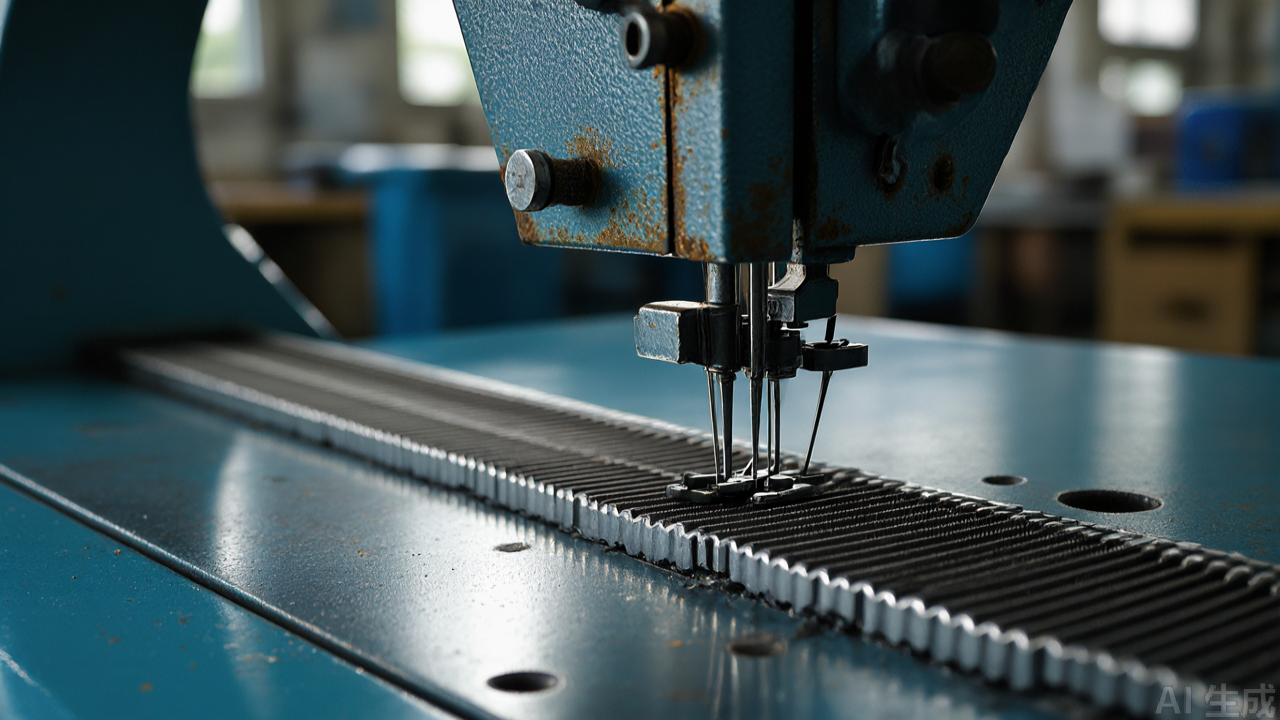
Daily Maintenance: The Two-Minute Routine
Daily maintenance is not a deep clean. It is a fast inspection that catches problems before they compound. The following checks can be performed at the start of each shift or during a natural pause in production.
Lint and Debris Removal
Lint accumulates fastest around the bobbin case area, under the needle plate, and in the feed dog teeth. Compressed air is the standard tool, but it must be used with care — blowing lint into the machine's interior can push debris into the oil reservoir and cause more harm than good. Direct the air downward and away from open oil ports.
- Remove the bobbin case and clear visible lint daily.
- Brush the feed dog teeth with a small stiff brush; do not use air alone, as compacted lint can harden.
- Wipe the needle plate surface with a lint-free cloth.
Needle Condition
A bent or blunt needle is the single most common cause of skipped stitches and thread breakage. Operators should check needle straightness at the start of each shift by rolling the needle on a flat surface or viewing it against a straight edge. A needle that has sewn through a dense seam or hit a pin should be replaced immediately, not inspected.
Tension Check
Thread tension drifts as lint builds up in the tension discs. A quick check — sewing a test seam on scrap fabric and examining both sides — takes seconds and catches tension problems before they affect production. On overlock machines, check all tension paths, including the lower looper, which is often neglected.
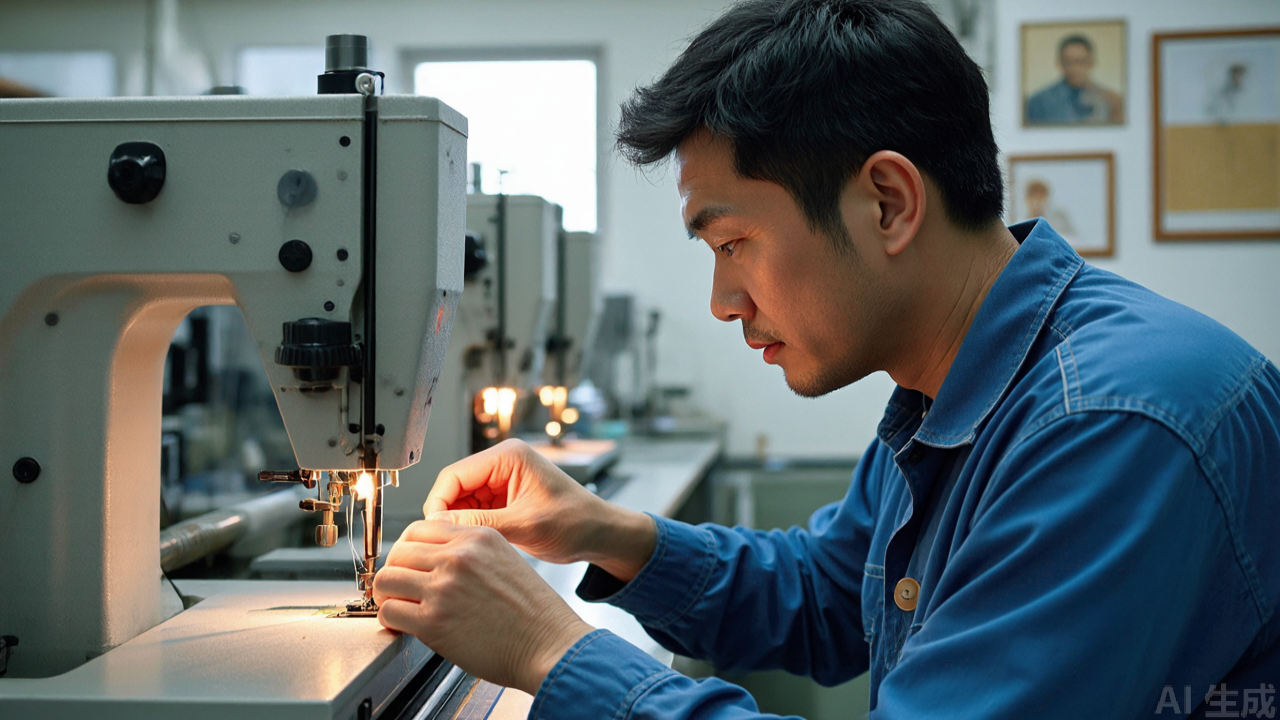
Weekly and Monthly Maintenance Tasks
Weekly: Lubrication and Belt Inspection
Industrial lockstitch machines with automatic lubrication systems require oil level checks and occasional filter cleaning. Machines with manual oiling points — typically older models or specialized machines — need oil applied to the designated points weekly. Over-oiling is as problematic as under-oiling: excess oil attracts lint and can stain fabric.
Check drive belts for tension and glazing. A glazed belt slips under load, causing inconsistent stitch length and accelerated wear on pulleys.
Monthly: Timing and Hook Inspection
Rotary hook timing drifts gradually. A machine that has sewn millions of stitches will eventually show timing-related symptoms: skipped stitches at high speed, needle deflection, or thread fraying at the hook. Monthly inspection of the hook assembly — checking for wear on the hook point and verifying timing with a timing gauge — prevents unexpected failures.
The bobbin case tension spring should also be checked monthly. A weak spring produces loose stitches that cannot be corrected through normal tension adjustment.
Parts Replacement Cycles: What Actually Wears Out
Replacement intervals depend on fabric type, stitch density, machine speed, and operator technique. The following intervals are practical starting points for medium-weight fabric production at typical industrial speeds. Factories running heavy materials (denim, canvas, leather) or abrasive technical textiles should shorten these intervals significantly.
Presser Foot
The presser foot is a high-wear consumable that directly affects stitch quality. The foot's sole contacts the fabric and the feed dog with every stitch. Over time, the sole wears unevenly, the bottom surface develops grooves, and the foot no longer holds fabric consistently against the feed dog.
Symptoms of a worn presser foot for sewing machine applications include:
- Fabric slipping or shifting during sewing
- Uneven stitch length
- Puckering on lightweight fabrics
- Visible wear marks or grooves on the foot sole
Replacement interval: 3–6 months for single-shift operation on medium-weight fabric. Heavy or abrasive materials can wear a presser foot in 4–8 weeks. Different presser foot types — standard, zipper, hemming, walking foot — wear at different rates depending on their contact area and the materials they handle.
Feed Dog
Feed dog teeth wear down and lose their grip on fabric. A worn feed dog causes irregular stitch length and fabric slippage, particularly on slick or coated materials. Inspect teeth monthly under magnification; replace when teeth are rounded or the height difference between feed dog and needle plate exceeds specification.
Replacement interval: 6–12 months under normal conditions. Abrasive materials can halve this.
Needle Plate
The needle plate's needle hole enlarges over time as the needle passes through it millions of times. An enlarged hole allows fabric to be pushed into the gap, causing skipped stitches and fabric damage. The plate surface also wears, creating a groove that affects feed consistency.
Replacement interval: 12–24 months. Check the needle hole diameter against specification during monthly inspections.
Rotary Hook
The rotary hook is a precision component that wears at the hook point and on the bobbin case seating surface. A worn hook causes skipped stitches, thread breakage, and timing instability. Hook replacement is not a routine task — it should be based on inspection, not a fixed calendar. However, in high-volume production, hooks typically require replacement every 12–18 months.
Bobbin and Bobbin Case
Plastic bobbins deform under tension and heat; metal bobbins wear at the edges. A deformed bobbin causes inconsistent tension and thread nesting. Bobbin cases wear at the tension spring and the latch mechanism.
- Bobbins: replace when they show cracks, deformation, or rough edges — typically every 2–4 months in continuous use.
- Bobbin cases: inspect monthly; replace every 6–12 months or when tension cannot be adjusted reliably.
Matching Replacement Parts to Your Machines
One practical problem buyers raise repeatedly is parts compatibility. A presser foot that fits a Juki DDL-8700 may not fit a Brother S-7200, even though both are single-needle lockstitch machines. Shank type (low shank, high shank, slant shank), mounting screw position, and foot width all vary between models.
The same applies to feed dogs and needle plates: a plate designed for a specific needle system and feed dog configuration will not work on a different machine class. When sourcing industrial sewing machine parts, the safest approach is to order by machine model and part number rather than by description alone.
For factories running mixed machine fleets — common in contract manufacturing — maintaining a parts cross-reference chart is worth the administrative effort. It prevents the wrong parts from being ordered and reduces downtime when a machine goes down mid-shift.
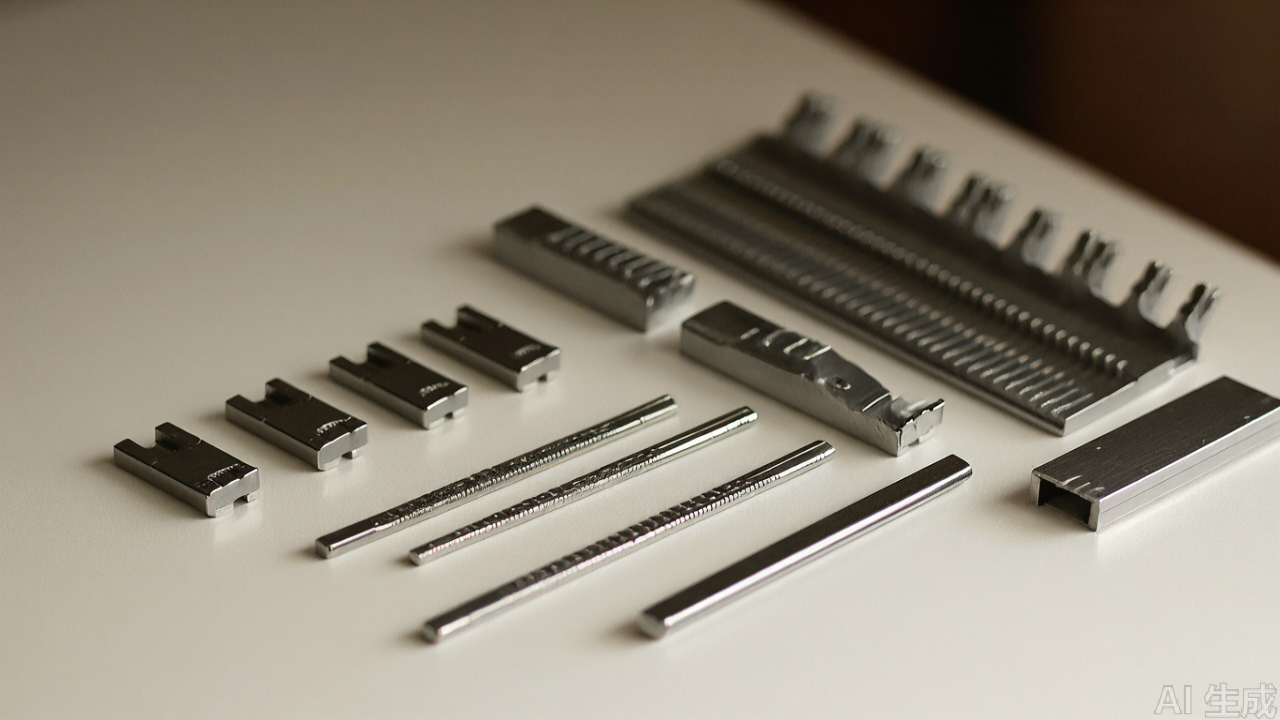
Building a Practical Replacement Schedule
A replacement schedule should be based on running hours, not calendar months. A machine running two shifts accumulates wear twice as fast as one running a single shift. The following approach works for most factories:
- Track running hours per machine. A simple log at the machine or a digital record in the maintenance system is sufficient.
- Set replacement intervals by material type. Heavy and abrasive materials accelerate wear on presser feet, feed dogs, and needle plates.
- Inspect before replacing. Not every part needs replacement at the scheduled interval. Inspection prevents unnecessary parts consumption.
- Keep critical spares on hand. Presser feet, needles, bobbins, and bobbin cases should be stocked at levels that cover at least two weeks of production.
Buyers sourcing from a China sewing parts supplier should confirm that replacement parts meet the dimensional specifications of the original equipment. Small variations in presser foot height or feed dog tooth geometry can affect stitch quality, even if the part appears to fit.
Common Mistakes in Parts Replacement
Replacing parts without addressing root cause. A presser foot that wears out in weeks rather than months usually indicates a machine setup problem — incorrect presser foot pressure, misaligned feed dog, or excessive machine speed. Replacing the part without correcting the setup leads to repeat failures.
Mixing worn and new components. Installing a new feed dog against a worn needle plate creates a mismatch that affects feed timing. When one component in a wear pair is replaced, inspect the mating component.
Using incompatible aftermarket parts. Aftermarket parts vary widely in quality and dimensional accuracy. For precision components like rotary hooks and bobbin cases, specification compliance matters more than price.
Neglecting the parts that don't fail visibly. Tension springs, oil wicks, and belt tensioners degrade gradually and are often overlooked until they cause a production problem.
Summary
Effective maintenance is less about following a rigid schedule and more about understanding which parts wear, how they fail, and what symptoms indicate replacement. Daily lint removal and needle checks take minutes. Weekly lubrication and belt inspection prevent gradual degradation. Monthly hook and timing inspection catches problems before they cause defects. Parts replacement intervals — 3–6 months for presser feet, 6–12 months for feed dogs, 12–24 months for needle plates — provide a starting point that should be adjusted for material type, machine speed, and shift patterns.
The goal is not to replace parts more often, but to replace them at the right time: before they affect stitch quality, but not before they need it. For factories sourcing replacement parts internationally, maintaining accurate machine model records and a parts cross-reference chart is as important as the maintenance schedule itself. PL's full parts catalog is documented at pinseam.com for buyers who need to verify dimensional specifications against their machine models.
Need this part for your workshop?
Get a Free Quote on WhatsApp: +86 137 3825 6697Browse the full catalog at pinseam.com · Free 2026 full catalog (PDF) · Related guide: presser foot
📢 New arrivals & factory updates on Telegram — join our channel
Edited by the technical team at PL (Professional Leader) — high-quality sewing machine accessories from China. About our factory | Catalog: pinseam.com | WhatsApp: +86 137 3825 6697 | Telegram: @plsewingparts
Explore Our Parts Guides
- multifunctional needle threader guide — how to use & choose
- jack multifunctional needle threader — one-second threading
- sewing machine accessories, needle threaders & thread guides
- industrial & magnetic seam guides
- presser foot guide: types & compatibility
- industrial presser feet for factory lines
- roller & rolled hemmer presser feet
- industrial sewing machine parts & spare parts
- wholesale sewing machine parts — PL (Professional Leader) factory direct
- about PL (Professional Leader) — Hangzhou Fubang, sewing parts brand since 2018
Questions about a specific part? Chat with us on WhatsApp +86 137 3825 6697 — factory direct, reply within hours.


Comments
Post a Comment