Jack Sewing Machine Needle Threader: How It Works, When to Replace It, and How to Choose a Replacement
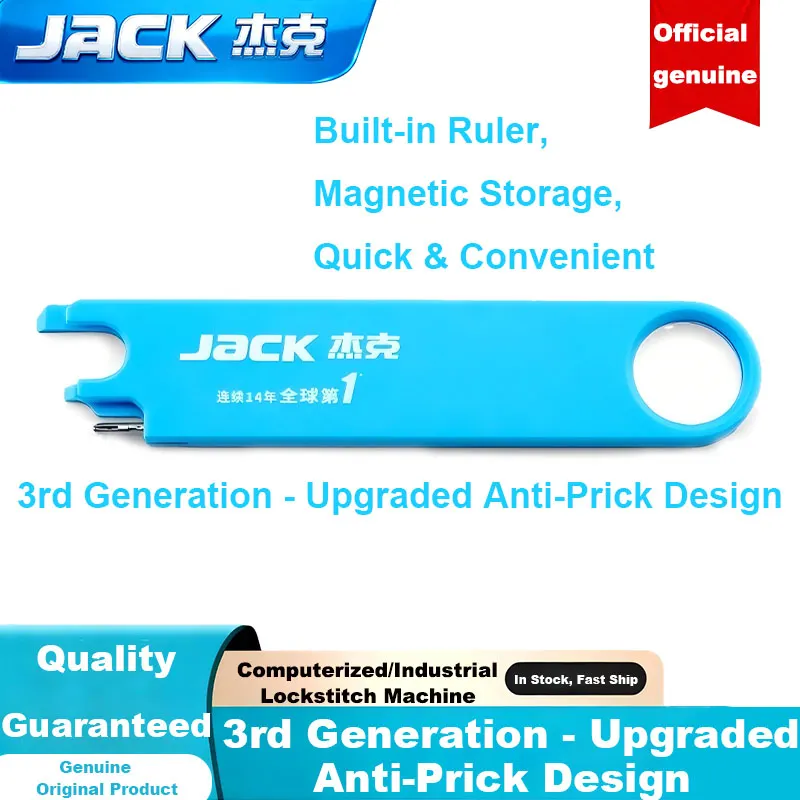
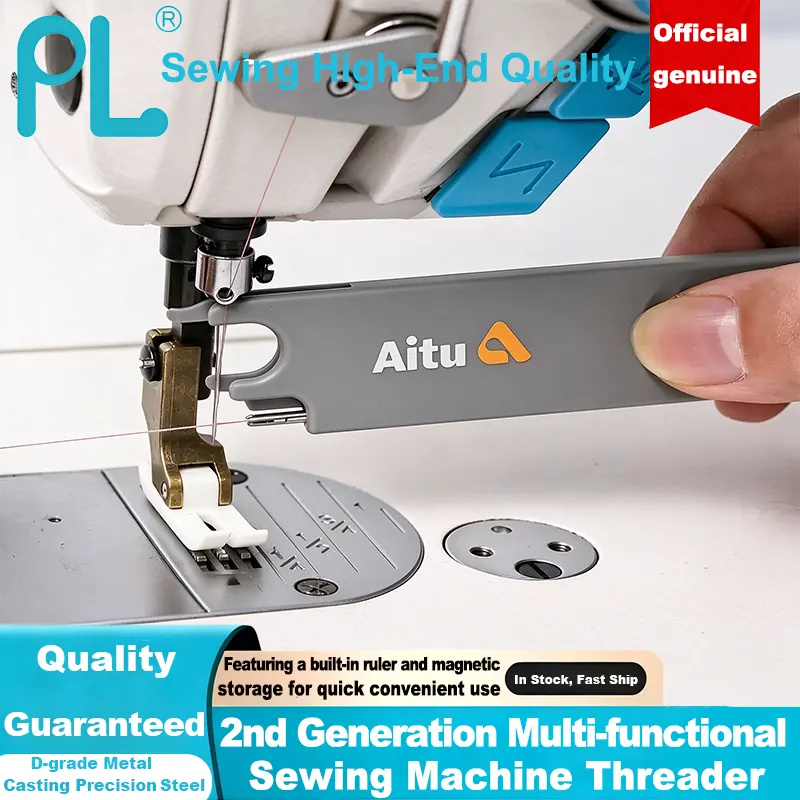
Jack sewing machines — especially the Jack F4, A4, and C5 lockstitch series — have become one of the most common sights in garment workshops across Southeast Asia, South America, and the Middle East. One reason is the multifunctional needle threader: a small spring-assisted device mounted beside the needle bar that pulls the thread through the needle eye in one motion, saving operators seconds on every thread change.
Related guide: industrial sewing machine parts — types, fitting and machine compatibility.
For the full breakdown — threader types, the three failure modes, and how to match a replacement to your machine class — see the needle threader guide.
In a factory running 50 machines across two shifts, those seconds add up. But when the threader wears out or breaks, many workshops discover that sourcing the right replacement is harder than it should be. This guide explains how the Jack needle threader works, why it fails, how to identify the correct replacement part, and what to check before ordering from a supplier.
1. What the Jack multifunctional needle threader actually does
On most domestic machines, threading is done by hand or with a simple hook wire. Jack's approach on its lockstitch line is a quick thread device: a small lever-and-hook mechanism linked to the needle bar. The operator pulls the lever down, the hook passes through the needle eye from back to front, catches the thread, and releases it as the lever returns.
The "multifunctional" part of the name comes from what is bundled into the same assembly on many Jack models:
- Automatic threader hook — pulls thread through the needle eye
- Thread tension guide on the same bracket
- Needle position reference — the assembly doubles as a finger guard near the needle
Because these functions share one bracket, a worn hook or a bent guide usually means replacing the whole threader assembly, not just one piece.
2. Why threader tools fail — the three common failure modes
Workshop reports and our own after-sales records point to the same three causes, in roughly this order:
2.1 Hook tip wear. The hook passes through the needle eye thousands of times a week. The tip gradually rounds off, and one day it starts missing the eye or breaking the thread instead of catching it. This is normal wear — on a two-shift factory line, expect it within 6 to 12 months of heavy use.
2.2 Bent hook from needle strikes. When a needle breaks or deflects — thick seams, wrong needle-to-thread pairing, or a pulled fabric edge — the broken needle often hits the threader hook on its way down. A visibly bent hook will thread inconsistently or scratch the thread, causing fraying.
2.3 Spring fatigue. The return spring loses tension over time. The symptom is a threader that pulls down but does not snap back cleanly, leaving the hook in the needle path — which then leads to failure mode 2.2.
All three are cheap to fix. None of them justify replacing the machine head — yet in many workshops the whole assembly stays broken for months because nobody could identify the part number.
3. Identifying the correct jack needle threader replacement
Before ordering a jack threader tool, match on three things:
3.1 Machine series. Jack F4 / A4 / C5 lockstitch heads use a threader assembly that differs from the one on Jack overlock (JK-787 and similar) and flatbed interlock machines. The mounting bracket screw spacing is the fastest visual check.
3.2 Mounting type. Most Jack lockstitch threaders clamp to the needle bar housing with a single screw; a few older variants screw into a tapped hole. Photograph the mounting point before ordering.
3.3 Hook length and wire diameter. Hook lengths vary slightly between generations. A hook that is 2 mm too long will bottom out before passing through the eye; one too short will not reach the thread.
If the original part is no longer available, a universal industrial needle threader with an adjustable bracket is a workable substitute — it trades a perfect fit for availability. For mixed-brand workshops (Jack, Juki, Brother, Typical on the same floor), a universal threader stock often makes more sense than keeping one spare per machine brand.
4. Installation: five minutes with one screwdriver
- Power off and unplug the machine. Remove the needle for safe access.
- Loosen the mounting screw on the old threader assembly and slide it off the needle bar housing.
- Slide the new assembly on, aligning the hook with the needle eye path. Do not fully tighten yet.
- Thread the machine, pull the threader lever, and check that the hook passes through the eye centrally without touching the needle sides.
- Tighten the screw, reinstall the needle, and test ten threading cycles. If the hook scrapes the needle, adjust the bracket angle slightly.
Common mistake: overtightening the clamp screw, which cracks the plastic bracket — the most common return reason for this part category.
5. What to check before ordering from a parts supplier
The jack quick thread device is a low-value, high-frequency part, which makes it a magnet for inconsistent quality. Before placing an order, especially for OEM/wholesale quantities:
- Material of the hook wire — spring steel holds shape; ordinary iron wire does not. Ask.
- Spring spec — request a sample; a weak spring creates the failure loop described in section 2.3.
- Packaging — small parts shipped loose in bulk cartons arrive bent. Individual bagging costs little and halves damage claims.
- Supplier part cross-reference — a serious supplier can match your Jack model to the assembly in one message. If they cannot, that is the answer.
This is also where brand reputation gets built quietly: a parts supplier whose threader fits on the first try becomes the default source for the next order of presser feet, needle plates, and feed dogs. That is the logic behind how we at Pinseam — PL (Professional Leader), an industrial sewing machine parts brand — handle our industrial presser foot and attachment lines: same part-number discipline, applied to the small components most suppliers treat as an afterthought.
If you are replacing a threader on a JACK lockstitch machine, the JACK 3rd generation anti-prick needle threader is the assembly we supply most often, together with the matching thread guides and tension parts.
6. FAQ
Q: Does a Jack needle threader fit a Juki DDL-8700? Not the genuine Jack bracket. The mounting differs. Use a universal industrial threader with adjustable clamp instead.
Q: Can I run the machine with a broken threader? Yes — the machine sews normally; you lose only the auto-threading convenience. But remove the broken assembly if the hook fragments can fall into the hook race.
Q: What is the typical wholesale MOQ? For accessories in this category, B2B suppliers commonly quote MOQs from 100 pieces. Sample orders of 5–10 pieces are usually available for quality verification before bulk.
Q: How do I know if my threader problem is the hook or the spring? Pull the lever and release slowly. If the hook returns weakly or hangs midway, it is the spring. If it snaps back smartly but still misses the eye, it is hook wear or bending.
Pinseam — PL (Professional Leader) — industrial sewing machine parts: presser feet, attachments, and spare parts for lockstitch, overlock, and interlock machines. Wholesale and OEM inquiries welcome.
Need this part for your workshop?
Get a Free Quote on WhatsApp: +86 137 3825 6697Browse the full catalog at pinseam.com · Free 2026 full catalog (PDF) · Related guide: industrial sewing machine parts
📢 New arrivals & factory updates on Telegram — join our channel
Edited by the technical team at PL (Professional Leader) — high-quality sewing machine accessories from China. About our factory | Catalog: pinseam.com | WhatsApp: +86 137 3825 6697 | Telegram: @plsewingparts
Explore Our Parts Guides
- sewing machine accessories, needle threaders & thread guides
- industrial & magnetic seam guides
- presser foot guide: types & compatibility
- industrial presser feet for factory lines
- roller & rolled hemmer presser feet
- industrial sewing machine parts & spare parts
- wholesale sewing machine parts, factory direct
- about PL (Professional Leader)
Questions about a specific part? Chat with us on WhatsApp +86 137 3825 6697 — factory direct, reply within hours.


Comments
Post a Comment