Sewing Machine Accessories That Lift Production Line Efficiency
Factory managers and production supervisors often look for gains in workflow, operator skill, or machine speed when chasing higher output. Yet in many garment plants, the fastest return on investment comes from a component that costs a fraction of a machine: the presser foot. This article explains how small sewing machine parts—presser feet, feed dogs, and needle plates—directly influence stitch quality, operator fatigue, and line efficiency, and how to select the right ones for your specific operations.
Why Small Sewing Machine Parts Are a Hidden Bottleneck
On a lockstitch machine running at 5,000 stitches per minute, the presser foot and feed dog work in a cycle that lasts milliseconds. If that cycle is not perfectly matched to the fabric, the machine does not produce clean seams—it produces rejects, rework, and operator adjustments. Each of those interruptions costs far more than the price of a quality spare part.
Most factories replace needles and thread regularly but leave presser feet and feed dogs in service until they are visibly worn. By that point, the parts have already caused thousands of imperfect stitches. In a high-volume line, a worn presser foot can reduce efficiency by several percentage points without any operator noticing the gradual decline.
The Presser Foot: The Most Underrated Tool on Your Line
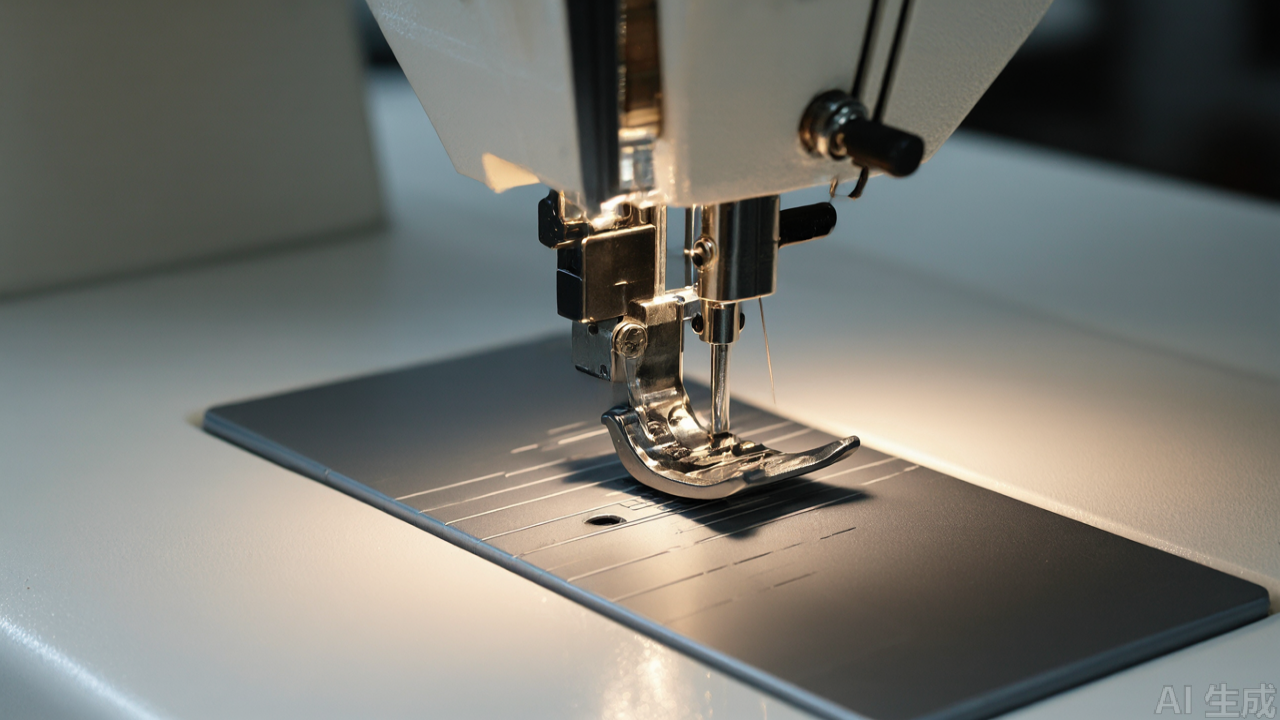
The presser foot is not a universal component. Although standard snap-on or screw-on feet look similar across brands like Juki, Brother, and Jack, their bottom geometry, spring tension, and surface finish differ significantly. A foot designed for heavy denim will leave pressure marks on silk; a foot meant for light knits will not hold a stable seam on coated canvas.
When a factory manager asks why a line running stretch fabrics has a 6 percent rework rate, the answer is often found in the presser foot. Standard feet do not have enough grip on the top ply for certain materials, causing ply shift and uneven feeding. Specialized feet—such as a walking foot or a Teflon-coated foot—solve this at the source, without slowing the operator.
Key Presser Foot Types for Common Production Scenarios
- Standard straight-stitch foot: For basic seams on woven fabrics. Choose a full-steel version if your line runs more than eight hours per day; the extra rigidity reduces deflection at high speed.
- Rolled hem foot: For narrow hems on blouses and shirts. It eliminates manual folding and can double the speed of hemming operations.
- Gathering or shirring foot: For producing uniform gathers in dresses and home textiles. The foot's bottom slot creates even fullness without pre-marking.
- Walking foot (compound feed): For multiple plies, leather, or quilted materials where the top layer tends to shift against the bottom layer.
Each type changes the way the fabric enters the needle zone. Choosing the correct foot for each operation is not a luxury—it is a basic setup decision that affects every seam produced.
Feed Dogs and Needle Plates: The Invisible Partners
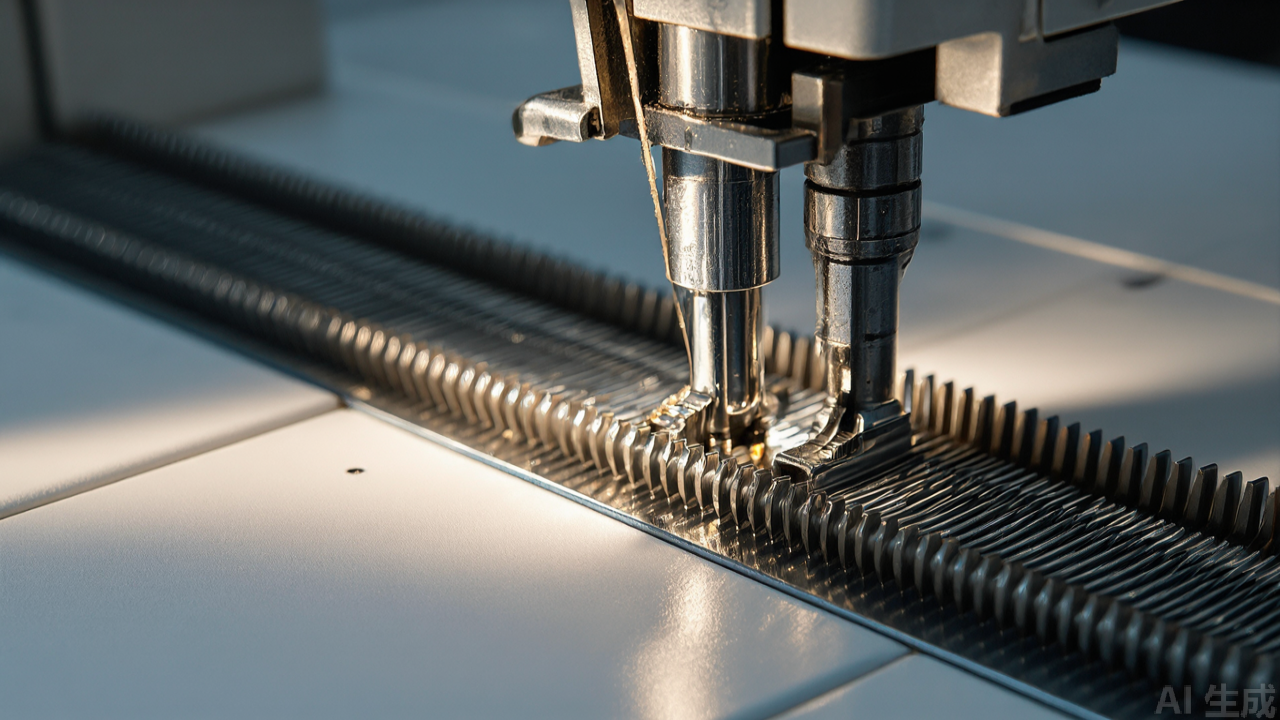
The feed dog works with the presser foot to move fabric forward. Its tooth profile—height, pitch, and angle—must match the material. Fine-tooth feed dogs suit lightweight fabrics; coarse-tooth versions grip heavy materials. If the feed dog is worn flat, the fabric slips and stitch length becomes irregular. Replacing feed dogs is inexpensive and can restore consistent feeding immediately.
Needle plates are equally important. The needle hole size must match the needle and thread used. A hole that is too large allows the fabric to be pushed down into it, creating skipped stitches or fabric damage. A hole that is too small causes thread friction and breakage. For high-speed lockstitch machines, a needle plate with a polished, slightly countersunk hole reduces thread drag and heat buildup.
How to Diagnose Efficiency Loss Caused by Small Parts
Before investing in new machines, run a simple diagnostic on your line. Select one operation that has been running the same style for more than two weeks. Check three variables:
- Stitch consistency: Measure seam length across ten consecutive pieces. Variation above 5 percent indicates feed system problems.
- Fabric marking: Inspect the area under the presser foot after sewing. Glossy marks or pressure lines mean the foot's surface finish is wrong for the material.
- Operator intervention: Ask the operator how many times per hour they adjust the fabric manually. Frequent adjustments are a sign that the parts are not doing their job.
If any of these checks fail, replace the presser foot, feed dog, or needle plate before changing machine settings or blaming the operator. In most cases, the parts are the root cause.
Material and Coating Choices for Durable Presser Feet
Presser feet are made from different materials, and the choice affects both durability and performance. Standard chrome-plated feet are adequate for light to medium use. For continuous industrial sewing machine operation, a full-steel foot with heat treatment offers better wear resistance. Steel feet maintain their bottom surface flatness longer, which keeps fabric feeding even over months of use.
For sticky materials—such as PVC-coated fabrics, synthetic leather, or laminated textiles—a non-stick coating on the foot sole prevents the material from dragging. This small change can reduce operator effort by a measurable amount, as the fabric slides more freely under the foot.
Practical Selection Criteria for Factory Buyers
When sourcing sewing machine spare parts, the cheapest option is rarely the most cost-effective. A presser foot that costs two dollars less but wears out in three months will create more downtime and quality issues than a slightly more expensive part that lasts a year. Here are the specifications to request from any supplier:
- Material grade: Ask whether the foot is made of full steel or stamped sheet metal. Full steel is preferable for high-speed or high-pressure applications.
- Surface hardness: Request the Rockwell hardness number if possible. A rating above HRC 45 indicates suitable wear resistance for daily industrial use.
- Bottom surface finish: The foot sole should be polished or coated, not rough. A rough surface will drag on fabric and cause uneven feeding.
- Compatibility: Confirm the shank type (low shank, high shank, or slant shank) and the machine brand and model. Do not assume that a "standard" foot fits every machine.
For factories that run multiple machine brands, standardizing on one type of presser foot across all machines can simplify inventory and operator training. Check whether the foot shank dimensions match across your equipment before making this change.
Maintenance Practices That Extend Parts Life
Regular cleaning of the feed dog area prevents lint buildup that can alter the effective tooth height. A feed dog clogged with fiber will not grip the fabric properly, regardless of its original quality. Clean this area at least once per shift on high-speed lines.
Presser feet should be inspected weekly for wear on the bottom surface. A simple test: place the foot on a flat glass surface and check for rocking. If the foot rocks, the sole is no longer flat, and it should be replaced. Running a line with a rocking foot creates uneven pressure, which translates directly into seam puckering and ply shift.
When to Source from a China Sewing Parts Supplier
China remains the largest production base for industrial sewing machine parts, including presser feet, feed dogs, and bobbins. Many global machine brands source components from Chinese manufacturers. The challenge for buyers is finding a supplier with consistent quality control and accurate technical documentation.
When evaluating a China sewing parts supplier, request samples and test them on your actual production floor. A part that works in a lab may fail under the vibration and heat of continuous operation. Check that the supplier provides clear specifications—material, hardness, dimensions, and compatible machine models—rather than vague descriptions. For reference, PL's full parts catalog is documented at pinseam.com, which can help you verify model numbers and specifications before purchasing.
Conclusion: Small Parts, Measurable Gains
Production line efficiency is not only about machine speed or operator skill. The small sewing machine accessories that guide fabric through the needle zone determine whether a seam is made correctly the first time. A worn presser foot, an incorrect needle plate, or a clogged feed dog will quietly erode output and quality. By selecting the right parts for each operation, maintaining them properly, and replacing them before they fail, factory managers can achieve measurable gains without capital investment. Start with one line, one operation, and one part type—the results will speak for themselves.
Need this part for your workshop?
Get a Free Quote on WhatsApp: +86 137 3825 6697Browse the full catalog at pinseam.com · Free 2026 full catalog (PDF)
Edited by the technical team at PL (Professional Leader) — high-quality sewing machine accessories from China. About our factory | Catalog: pinseam.com | WhatsApp: +86 137 3825 6697


Comments
Post a Comment